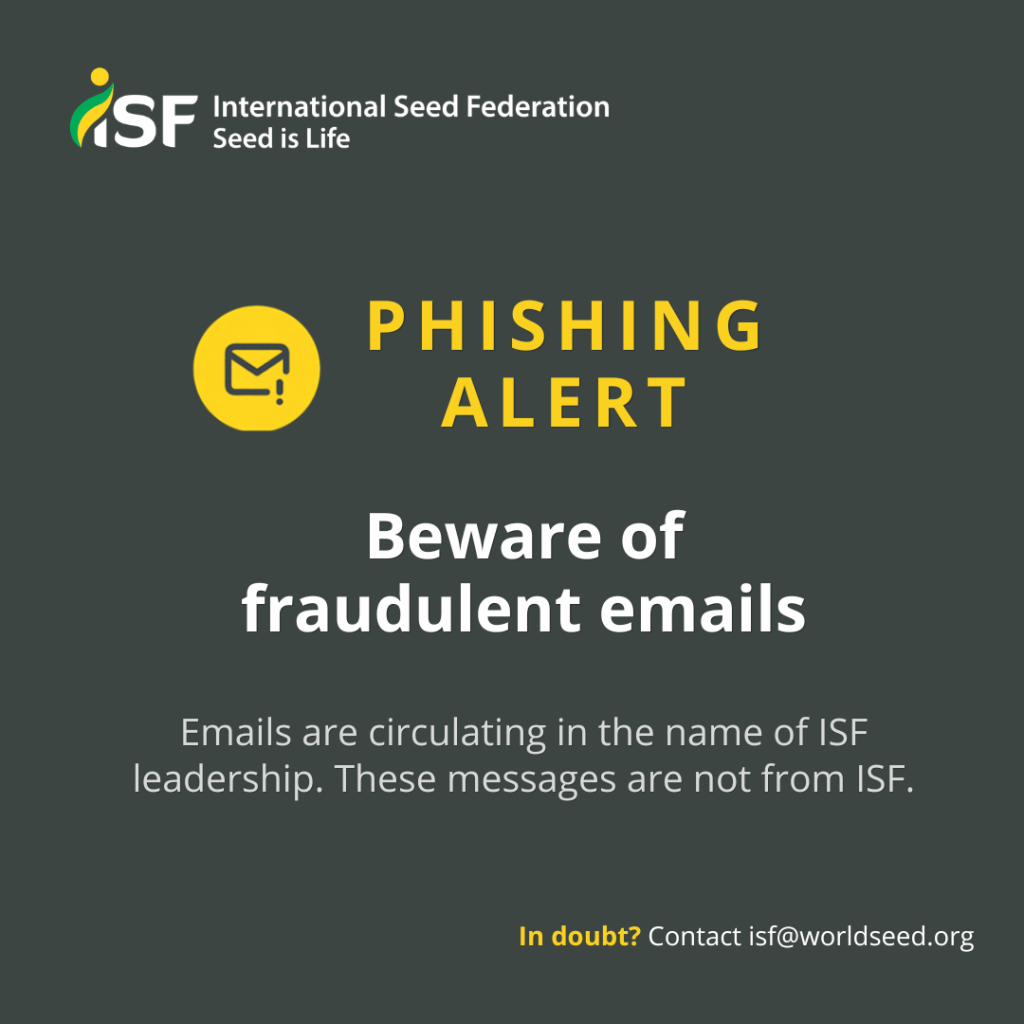
We have noticed a growing number of scam and phishing emails sent in the name of the ISF President. Some members and partners have already received them. To be clear: these messages do not come from the ISF President or from ISF.
Fraudsters use the names and titles of senior figures to make their messages look credible. They often rely on authority and urgency, hoping recipients will act before thinking. Impersonating the leader of a respected international organization is a common tactic, and ISF is not the only organization affected.
How to recognize a suspicious message:
- Unexpected or urgent requests, especially ones marked “confidential” or asking you to act immediately.
- Requests for money or financial changes, such as payments, gift cards, or updated bank details.
- Requests for personal or login information, or links and attachments you weren’t expecting.
- A sender address that looks almost right. Check for a different domain, small spelling changes, or a free webmail address (Gmail, Outlook, etc.) instead of an official ISF address.
- Unusual tone or phrasing that doesn’t match how ISF normally communicates.
What to do if you receive one:
- Don’t respond. Don’t click links, open attachments, or share any information.
- Don’t make any payment or act on the request.
- If you’re unsure, contact the ISF Secretariat via telephone at +41 (22) 365 44 20, and never use the contact details in the suspicious message.
- Forward the email as an attachment to isf@worldseed.org so we can track the activity and warn others.
- If you already clicked a link or shared details, alert your IT team straight away and let us know.
Genuine ISF emails come from official addresses ending in “@worldseed.org.” ISF never requests payments or sensitive information through unsolicited emails.
Please share this article with colleagues, especially those who handle finances, registrations, or member communications.
Thank you for your vigilance, and please contact ISF if you have any questions.#