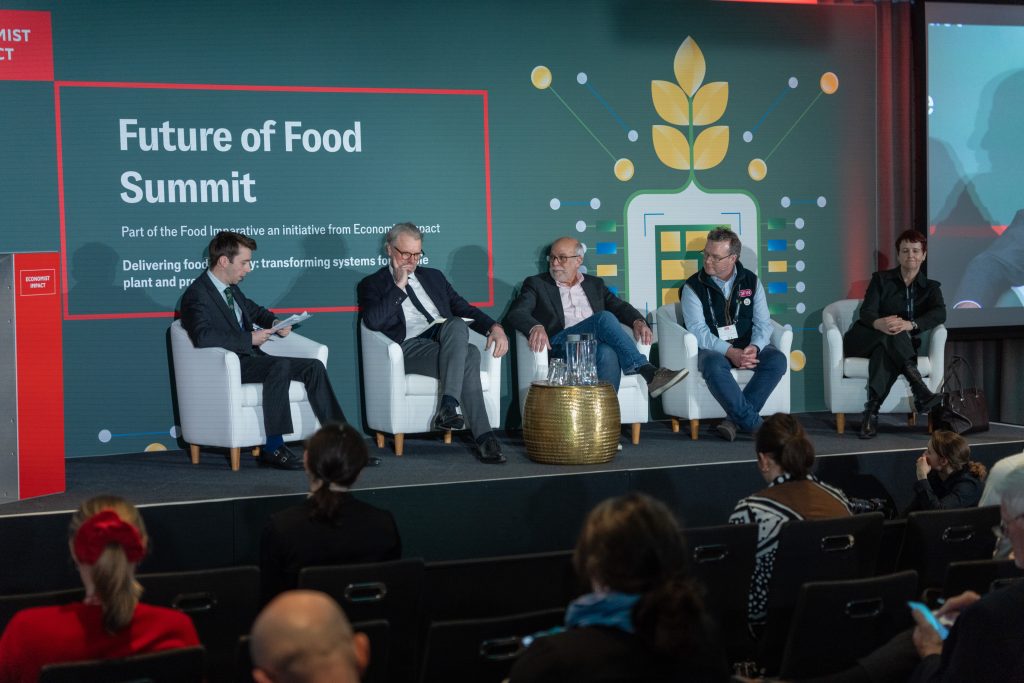
London, UK — Gene editing is transforming agriculture, offering solutions to global food challenges, fostering innovation, and demanding new approaches to regulation, collaboration, and communication. At the inaugural Future of Food Summit organized by Economist Impact Events, ISF Secretary General Michael Keller joined a panel discussion moderated by Ed Barker, Head of Policy and External Affairs, Agricultural Industries Confederation (AIC), featuring leaders from science, industry, and policy who shared their perspectives on the opportunities and responsibilities ahead.
Gene Editing: A Tool for Plant Breeding Innovation
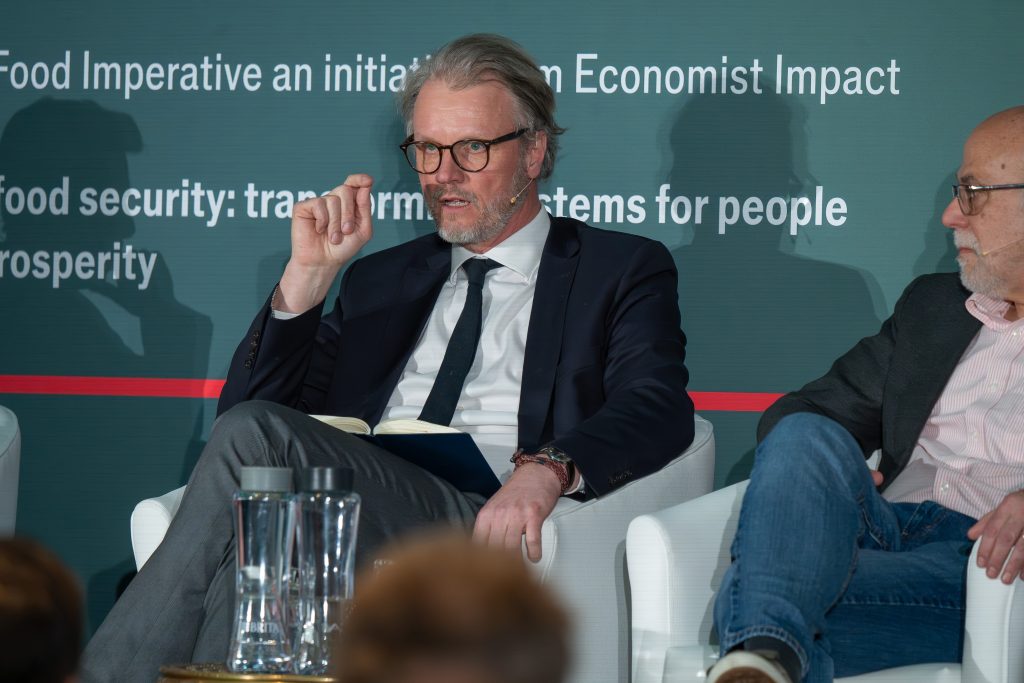
In his remarks, Michael Keller emphasized that gene editing is recognized as a crucial component of plant breeding innovation. Unlike other methods, gene editing enables precise modifications within a plant’s existing gene pool, allowing breeders to develop crops that are more resilient, productive, and adapted to local conditions. “It’s another tool in the toolbox,” Keller noted, highlighting its role in transforming agricultural challenges into opportunities.
However, the potential of gene editing can only be fully realized with predictable, science-based regulations. Given the global movement of seeds, consistency in rules across countries and regions is essential. Many countries already align on a key principle: gene-edited varieties without foreign DNA are indistinguishable from traditionally bred crops, simplifying regulatory approvals. Yet, Keller stressed the need for proactive engagement with governments and stakeholders to ensure policies keep pace with scientific advancements, which ISF continues to do.
From Lab to Table: Consumer-Centric Innovation
Tom Adams, CEO of Pairwise, shared how his company is leveraging CRISPR technology to create consumer-focused crop improvements. One standout example is a high-nutrition leafy green mustard, made palatable by removing an off-flavor, allowing it to be eaten raw. Another innovation is seedless blackberries, which can be grown more densely, increasing yields for farmers while meeting consumer preferences.
Transparency is a cornerstone of Pairwise’s approach. Adams explained that while the company avoids technical jargon on labels, it prioritizes clear communication about the benefits of genetic improvements. “Consumers want to know what’s in their food and why it matters,” he said. By focusing on tangible benefits, like better taste, nutrition, and sustainability, Pairwise aims to build public trust in gene-edited products.
Farmers as Partners in Innovation
Tom Allen-Stevens, Founder of the British On-Farm Innovation Network (BOFIN), highlighted the critical role of farmers in the gene editing conversation. England’s updated legislation, the UK Precision Breeding Act, now allows gene-edited crops to be tested in real-world farm conditions, making it a unique testbed in Europe. Allen-Stevens noted that farmers are not just end-users but active participants in research, capable of conducting rigorous scientific trials. “It’s about sharing knowledge, not just crops,” he said, emphasizing that these trials help demonstrate how new traits perform in practical settings.
This farmer-led approach challenges the notion that innovation is confined to labs or glasshouses. By involving growers early in the process, the industry ensures that new varieties are practical, adaptable, and aligned with on-farm needs.
Regulation and Trust: Balancing Safety and Innovation
Rebecca Sudworth, Director of Policy at the UK Food Standards Agency (FSA), discussed the importance of proportionate regulation. The FSA defines “precision breeding” as techniques that achieve results similar to traditional breeding but in a fraction of the time. While safety remains a priority, Sudworth emphasized that overregulation could stifle innovation, especially as climate change and shifting diets demand faster solutions.
The FSA does not mandate labeling for gene-edited products, but it encourages the food industry to communicate clearly about benefits, whether related to health, sustainability, or environmental impact. Sudworth also noted that retailers are increasingly engaged in discussions about precision breeding, recognizing that consumers value transparency and added benefits.
The Path Forward: Collaboration and Communication
In summary, the panelists agreed that the future of gene editing hinges on three pillars:
- Innovation – Continuing to develop crops that address real-world challenges
- Collaboration – Engaging farmers, regulators, and retailers to ensure solutions are practical and widely accepted
- Trust – Communicating openly with consumers about the benefits and safety of gene-edited products
As Michael stated, “Science tends to evolve faster than policy.” For its part, the seed industry is working to bridge that gap by advocating for sensible regulations, involving farmers in research, and ensuring that consumers understand the value of these advancements.#
Watch the panel on YouTube: