Beijing, China — As China develops guidelines for essentially derived varieties (EDVs) and establishes an administrative process to determine EDV status, ISF’s participation in the Beijing Seed Industry Association Congress on 4 September offered a timely opportunity to explain the international seed industry’s approach.
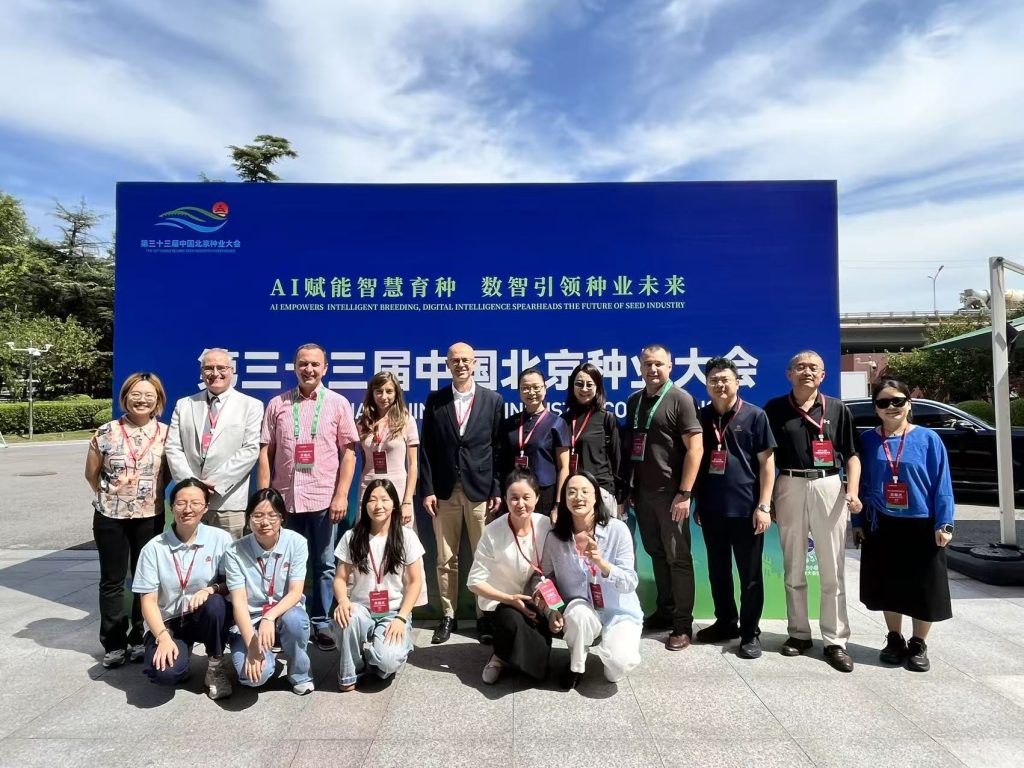
Dr. Lorelei Ana Garagancea, ISF Legal Director, presented ISF’s position on EDV assessment, the use of genetic similarity thresholds, and the role of licensing and specialized arbitration.
 The central message was that an effective EDV framework should reward innovation while preserving the rights of breeders whose varieties provide the foundation for further development. An EDV may bring valuable improvements and qualify for protection in its own right. Nevertheless, its commercialization must account for the contribution of the breeder of the protected initial variety. Predictable rules help breeders understand this relationship before investing in breeding programmes and support agreements that benefit both parties.
A particular focus was the distinction between genetic similarity and essential derivation. ISF explained that genetic similarity thresholds provide an evidentiary tool: they can trigger a shift in the burden of proof, requiring the breeder of a suspected EDV to provide evidence of independent development, if they wish to claim that their variety is not an EDV of an already existing variety. Exceeding a threshold should not automatically determine EDV status. Shared ancestry, a narrow genetic base or independently undertaken similar crosses can also produce high genetic similarity. Breeding records and the actual process of derivation therefore remain central to the assessment.
The presentation also stressed that thresholds should reflect the known genetic diversity of a species internationally, a consideration especially relevant to members operating across borders.
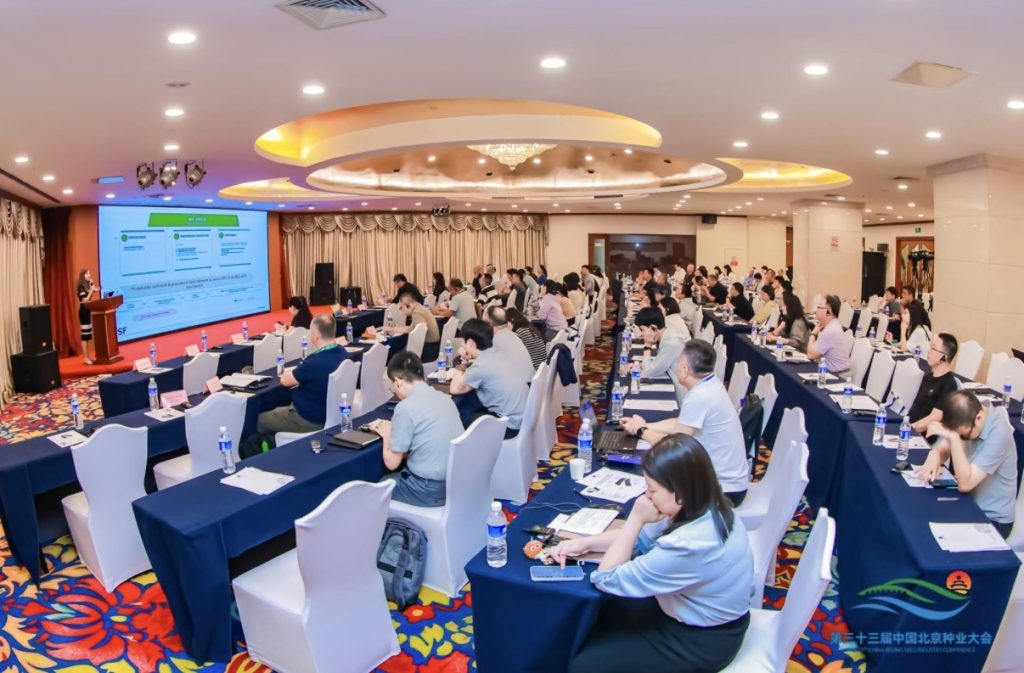
The design of EDV assessment routes will influence how evidence is used and how breeders can demonstrate independent development. ISF brought practical industry experience to this discussion through its crop-specific guidelines, examples of derivation and arbitration rules, highlighting the value of a transparent process grounded in breeding evidence.
The presentation also explained how licensing and ISF arbitration can help breeders manage EDV relationships and resolve disputes. This is relevant to both Chinese and international breeders exchanging germplasm or collaborating on variety development.
For ISF members, the importance of this engagement lies in contributing the industry’s perspective while China’s approach is taking shape. Clear and internationally coherent EDV rules can strengthen confidence in introducing varieties into China and working with Chinese partners, while ensuring that further innovation fairly recognizes the investment behind the initial variety.#