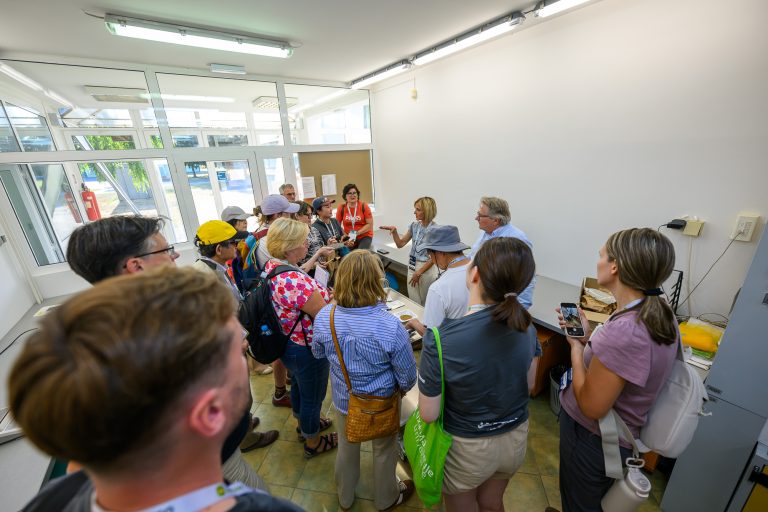
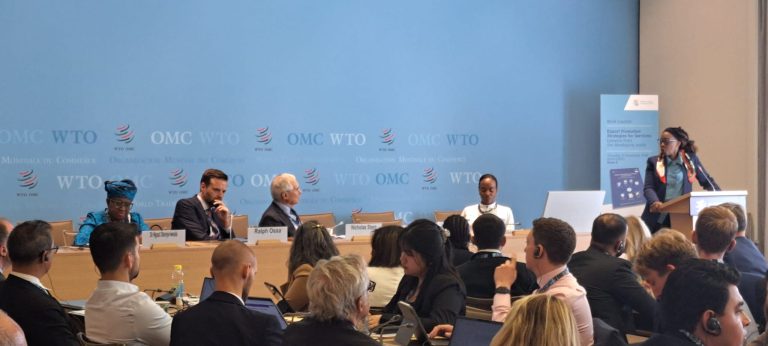
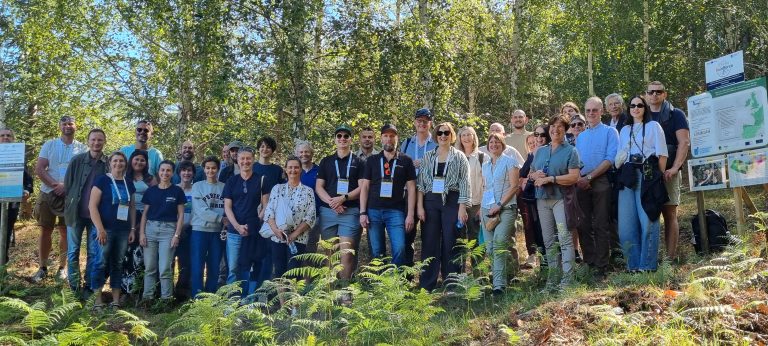
Norwich, UK — On September 7, 2026, ISF took part in a meeting hosted by Prof. Sophien Kamoun of the Sainsbury Laboratory at Assembly House in Norwich, UK, where ISF’s Director of Innovation, Trade and Market Access, Dr. Khaoula Belhaj-Fragniere, was invited to speak on global Plant Breeding Innovation (PBI) policy.
Norwich sits at the heart of the UK’s plant science and agri-tech ecosystem, home to leading research institutes, start-ups, and a strong community of scientists, breeders and policymakers working on the future of crop improvement.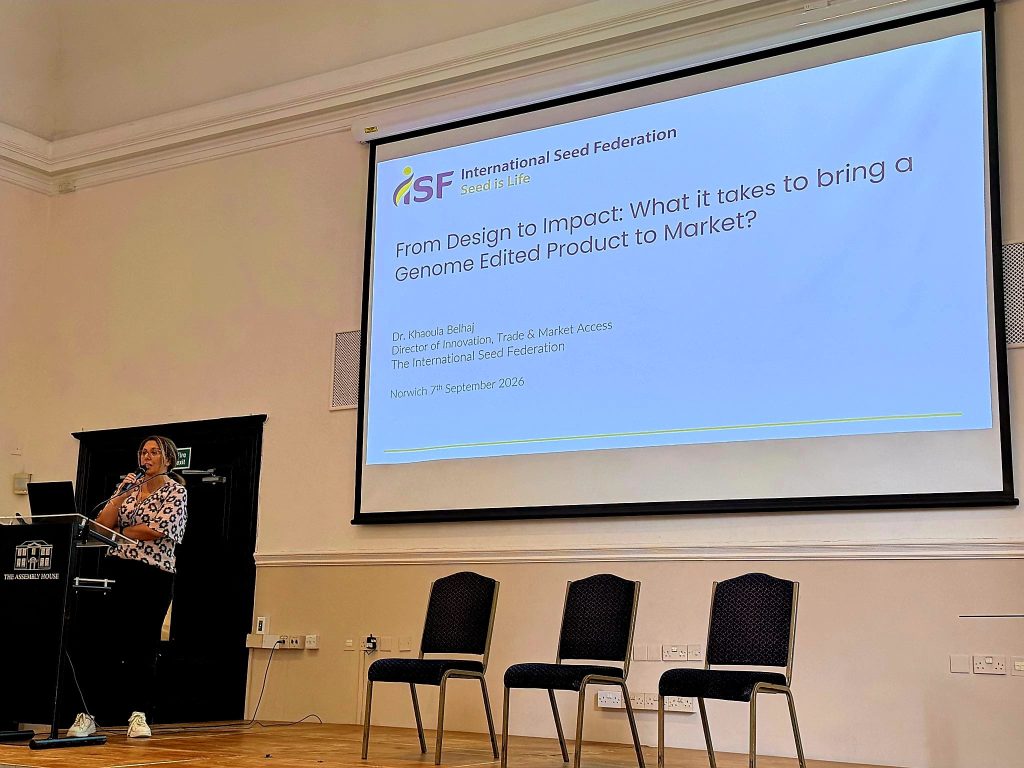
Khaoula’s presentation, entitled “From Innovation to Market: What Does It Take to Bring a Gene-Edited Product to Farmers?,” and the ensuing discussion explored a critical question for the future of innovation in agriculture: how do we ensure that scientific breakthroughs become real-world solutions for farmers and consumers? While advances in AI and gene editing continue to accelerate, policy often shapes the path to market as much as science. Recent developments in Europe, including the adoption of the EU’s New Genomic Techniques (NGT) Regulation and progress under the UK’s Precision Breeding framework, signal growing recognition of science-based and proportionate approaches to plant breeding innovation.
A particularly exciting UK milestone is the recent marketing authorization process for the precision-bred, late blight-resistant Maris Piper potato developed at the Sainsbury Laboratory, demonstrating how innovative public-sector breeding technologies can address pressing agricultural challenges.
A key message from the session was that innovation does not stop at regulatory approval. Predictable, science-based regulatory frameworks and greater international alignment are essential to ensure that innovative products can move efficiently from research to farmers’ fields. Regulatory fragmentation can create unnecessary costs, delays and barriers, particularly for smaller breeders and start-ups seeking to commercialize new solutions.
These issues remain central to ISF’s PBI advocacy: promoting enabling regulatory environments that foster innovation, support market access and help deliver more productive, resilient and sustainable agricultural systems.#