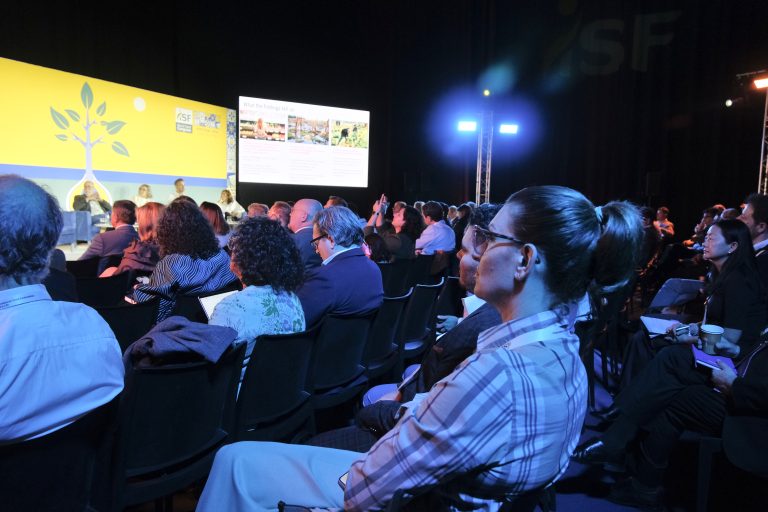
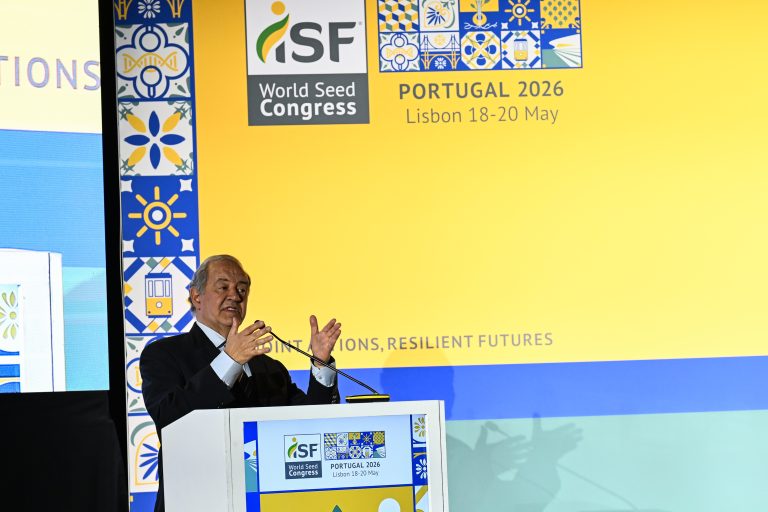
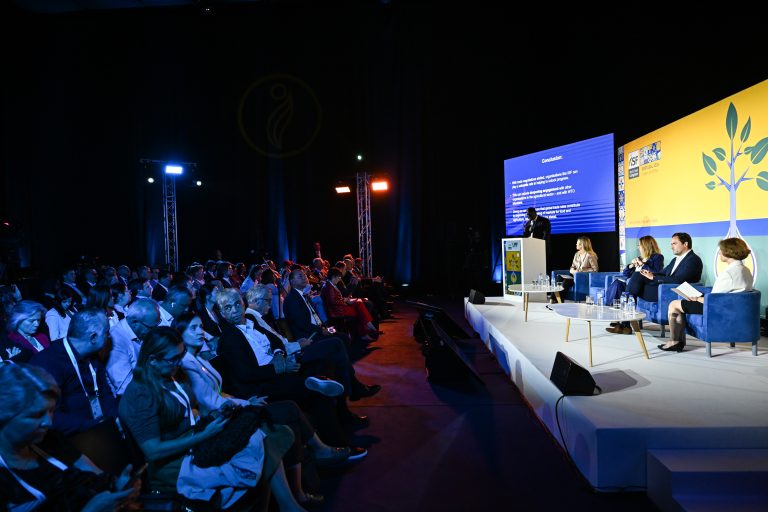
At the ISF World Seed Congress 2026 in Lisbon, Dr. António Costa Silva, former Minister of Economy and Maritime Affairs of the Republic of Portugal, delivered a clear message for agriculture: the future demands new thinking, new partnerships, and a deeper respect for the natural systems that sustain food production.
In a fireside chat with Linda Pereira at the Congress, Dr. Costa Silva reflected on the pressures facing agriculture, from climate change and soil degradation to resource use, waste, and technological disruption. “We cannot explore and build a new world with the old map,” he shared.
For the seed sector, this is a timely call to action. Seeds are the starting point of food systems, but their full potential depends on the health of the ecosystems, markets and policies of each country and region.

One of Dr. Costa Silva’s strongest warnings focused on soil health. He described the top 15 centimeters of soil as the foundation of global food security. This thin layer supports plant life, water retention, nutrient cycling, and the microorganisms that make agriculture possible. Yet intensive practices, erosion, pollution, and poor land management are damaging this living resource. Protecting soil is therefore not only an environmental priority. It is an economic and food security imperative.
Climate change was another central concern. While geopolitical instability continues to affect markets and supply chains, Dr. Costa Silva pointed to the deterioration of the earth’s climatic system as the primary long-term threat. Ocean warming, thawing permafrost, and more extreme weather events are already causing major agricultural losses and creating new risks for farmers.
His argument was not that agriculture should step back from innovation. Rather, innovation must be aligned with environmental stewardship. Technology will be essential, but only if it helps build systems that are more resilient, circular and resource-efficient.

Portugal’s experience offers practical examples. Dr. Costa Silva highlighted “mobilizing agendas” that bring together public policy, academia and industry to accelerate solutions. These initiatives include circular economy models that reprocess agricultural waste, develop sustainable packaging from native eucalyptus, and reduce dependence on inputs. He also noted Portugal’s progress in reducing pesticide use by around 40% over the past decade.
“There is not the notion of garbage in mother nature. So the garbage of some is almost the food stock for many.” – Dr. Antonio Costa Silva
The discussion also looked ahead to Portugal’s growing role as a technology and startup hub, recognized by The Economist magazine, which named Portugal its best-performing economy of the year in 2025.
Digital tools, scientific research and entrepreneurship can help agriculture anticipate risks, improve efficiency and unlock new solutions. But future readiness will depend on connecting technology with purpose.
Resilience will not come from one solution alone. It will require healthier soils, smarter regulation, circular systems, climate-resilient innovation and stronger collaboration between governments, researchers, companies and farmers.#
Watch the full session on Channel World Seed
Explore photos on Flickr