London, England — ISF participated in the International Grains Council (IGC) Conference 2026 on 10 June, contributing to global discussions on the future of grain trade and the role of plant breeding innovation in building resilient food systems.
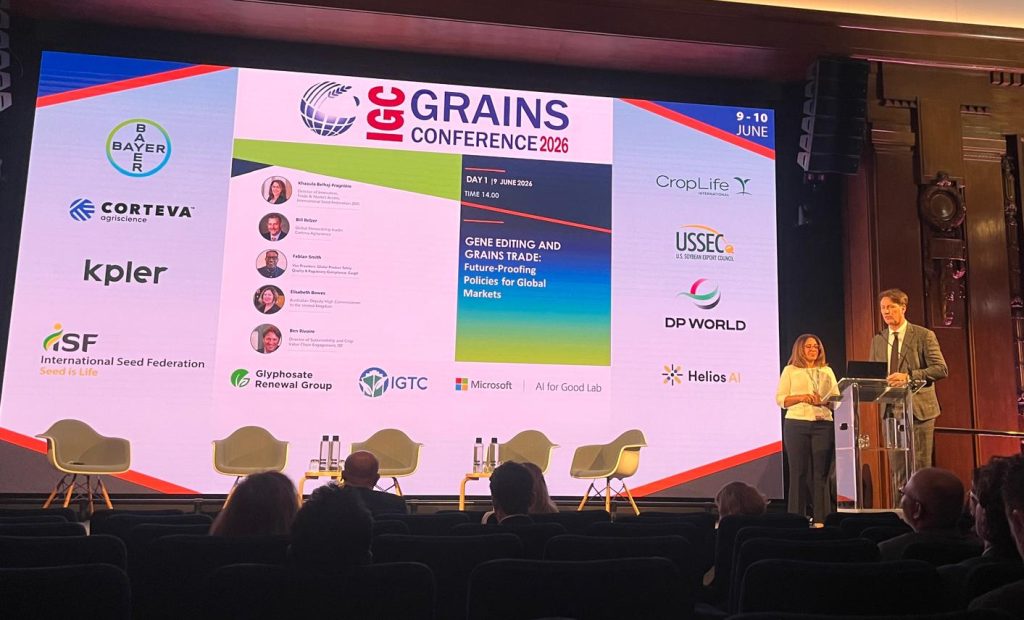
Held under the theme “Charting the Future Drivers of Global Grains Trade,” the conference brought together policymakers, industry leaders, and international organizations to examine the evolving challenges and opportunities facing global agricultural markets. As part of the programme, ISF co-organized a dedicated panel on “Gene Editing & Grains: Future-Proofing Policies for Global Markets,” reinforcing the importance of science-based, enabling regulatory frameworks for innovation and international trade.
Promoting Policy Dialogue on Plant Breeding Innovation
The session, led by the ISF’s Ben Rivoire and Khaoula Belhaj-Fragniere, in collaboration with the ISF Coordination Groups on Plant Breeding Innovation and Value Chain, explored how gene editing can contribute to addressing global food security challenges while supporting more resilient and sustainable grain production systems. This was a followup to the discussion during the Value Chain Forum held in Lisbon during the World Seed Congress.
The keynote presentation highlighted the growing role of gene editing in agriculture and provided an overview of the rapidly evolving global policy landscape. Discussions emphasized the importance of developing predictable and future-oriented regulatory approaches that enable innovation while facilitating international trade.
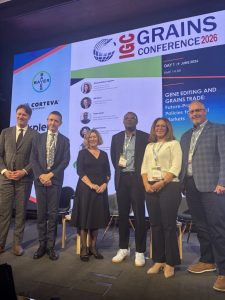
Bringing together representatives from government, the grain trade and the seed sector, the panel reflected the shared commitment across the value chain to strengthening collaboration in support of innovation.
Building Bridges Across the Grain and Seed Value Chains
Panel discussions highlighted several priorities for the future of global grain markets, including:
- Unlocking the potential of gene editing to strengthen resilient agricultural systems.
- Addressing the trade implications of diverging regulatory frameworks.
- Promoting predictable, science-based and trade-compatible policies.
- Enhancing collaboration across the value chain, from plant breeding to food production.
Participants agreed that regulatory alignment and cross-sector cooperation will be essential to ensuring that innovation can deliver tangible benefits for farmers, consumers and global food security.
A significant outcome of the conference was the announcement by IGC Executive Director Arnaud Petit that the IGC Council has endorsed the creation of a new multi-stakeholder collaboration platform involving IGC, ISF, the International Grain Trade Coalition (IGTC), CropLife International (CLI) and the World Trade Organization (WTO). The initiative will provide a dedicated forum to continue advancing dialogue on innovation, trade and enabling policy frameworks.

Strengthening International Partnerships
The conference also offered valuable opportunities to deepen engagement with partners across the global agri-food community. Activities included a reception hosted at Canada House by the IGTC, bringing together representatives from international organizations, governments and the grain and seed sectors, as well as a dedicated ISF–IGTC exchange to further strengthen cooperation between both organizations.
Building on the momentum generated during the conference, ISF looks forward to continuing these discussions at the ISF World Seed Congress 2027 in Toronto, where collaboration across the seed and grain value chains will remain a key priority.
Learn more