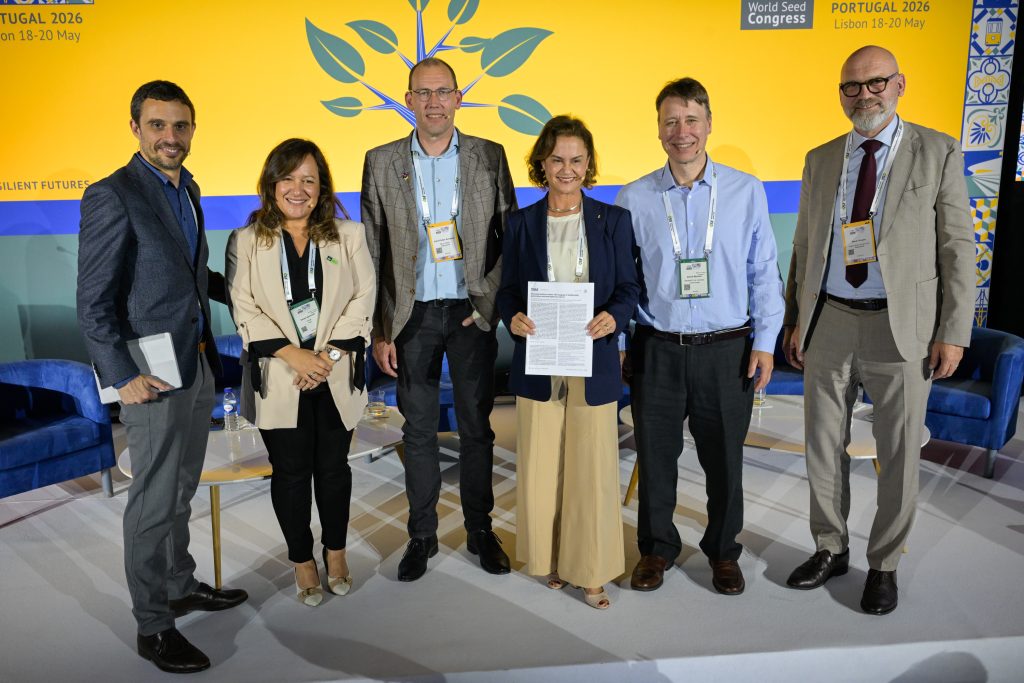
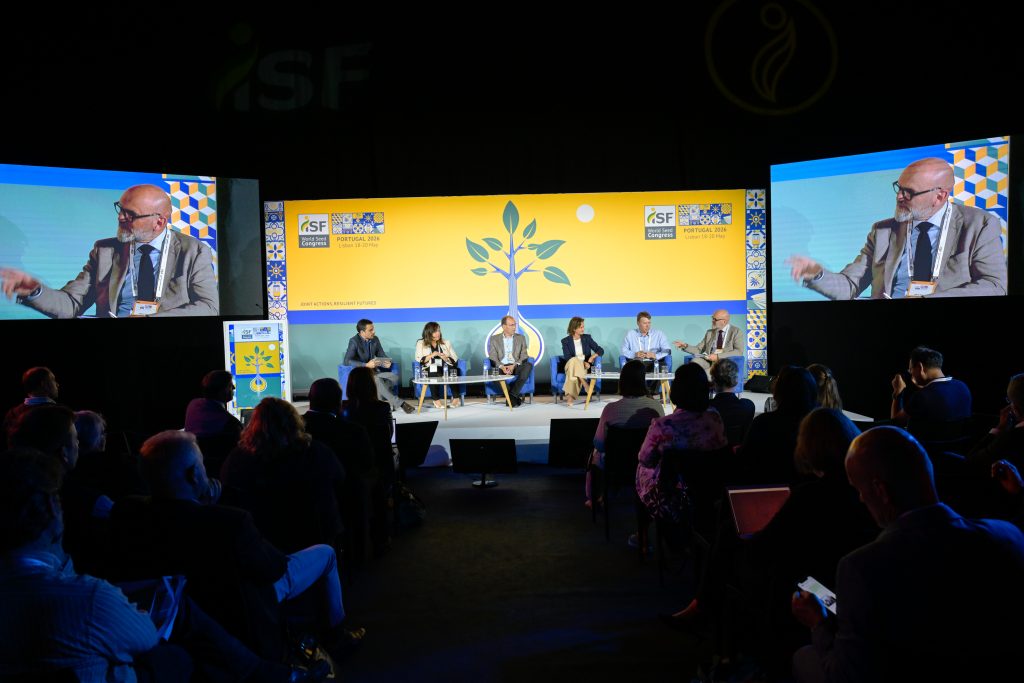
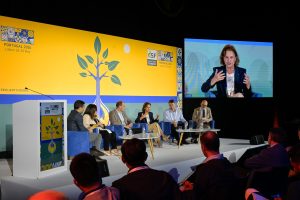
At the ISF World Seed Congress 2026, the panel discussion on plant genetic resources examined one of the most important questions for the future of food security: how can the world ensure access to crop diversity while fairly supporting the conservation systems that make this access possible?
The discussion focused on the International Treaty on Plant Genetic Resources for Food and Agriculture and the continuing challenge of improving its multilateral system for access and benefit-sharing. Following the recent impasse in Lima at the 11th meeting of the Treaty’s Governing Body (GB11), speakers from academia, public institutions, government, and a seed company reflected on the need for a framework that enables, rather than restricts, collaboration.
Promoting Crop Diversity
Modern agriculture depends on the global exchange of germplasm. Plant breeders, researchers, farmers, and gene banks all rely on access to genetic resources from different regions to develop crops that can respond to climate change, pests, diseases, and evolving food and nutrition needs.
Yet the panel warned that current governance often makes this exchange more difficult. Rigid interpretations of national sovereignty, complex legislation, and uncertainty around compliance can create what Prof. Soraya Bertioli of the University of Georgia described as a “legal curtain.” Instead of encouraging scientific cooperation, regulations may unintentionally foster a culture of fear in which researchers hesitate to share materials for fear of legal consequences.
For the plant breeding sector, this is an important concern. Plant breeding innovation depends on access to diverse genetic material. Without it, the development of resilient, nutritious, and locally adapted varieties becomes harder, slower, and more expensive.
Reframing Benefit-Sharing as Reinvestment
The panel also addressed the financial realities of conservation. Maintaining gene banks is essential but costly. According to Vania Azevedo, CGIAR Genebanks Accelerator Director, CGIAR alone spends roughly USD 26 million each year to conserve more than 740,000 accessions. Speakers argued that the system must move beyond a narrow understanding of “benefit-sharing” and toward a broader model of shared investment.
As Alwin Köpse, Head of International Affairs of the Swiss Federal Office for Agriculture and Chair of GB11, noted: “I don’t really like the term benefit sharing; it’s more kind of a reinvestment into conservation of plant genetic resources, into running this system that makes facilitated access possible.”
This framing notes that conservation is not a passive archive. It is an active infrastructure for food security, research, and innovation, and it requires long-term funding and technical capacity.
The private sector also has a role to play. John-Pieter Schipper, CEO of Bejo, summarized the breeding industry’s position clearly: “I tend to say free access, but not for free.” The message is that access should remain facilitated, but the system supporting that access must be financially viable for plant breeding companies.
“If it were gold, pure gold, why aren’t the most biodiverse countries the richest in the world? We are an ecosystem; we need each other.” – Prof. Soraya Bertioli
The path forward may require a “coalition of the willing”: stakeholders ready to support gene banks, advocate for simpler access protocols and rebuild trust.
Plant genetic resources are a shared foundation. Protecting them, accessing them, and investing in them must also be a shared responsibility.#