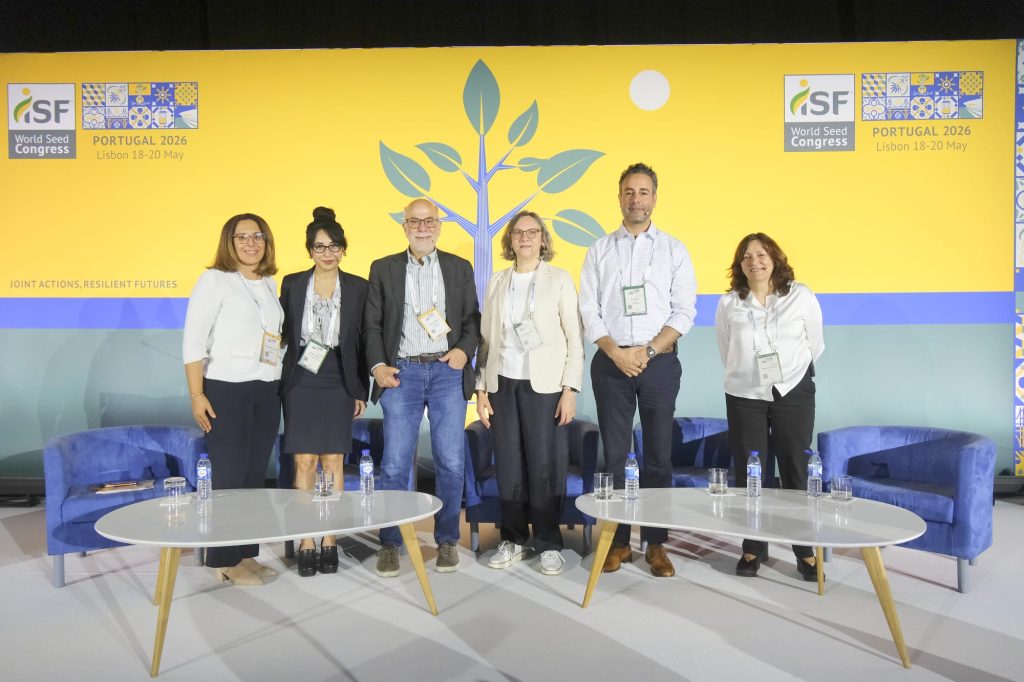
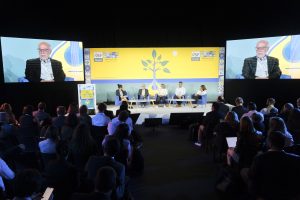
At a panel discussion at the ISF World Seed Congress 2026, experts from industry, academia, and government explored a critical question for agriculture: how can innovation move from the lab to the field to the consumer in ways that strengthen food security and deliver real value to consumers and farmers?
The discussion, which brought together perspectives from research, regulation, industry, and the wider food value chain, was moderated by Pratima Singh, Food Imperative Lead at The Economist Impact. Speakers were Tom Adams, CEO of Pairwise; Eyal Maori, CTO of Tropic; Simona Radutoiu, Scientific Director of ENSA, and Ana Paula Garcia of the Portuguese Directorate-General for Food and Veterinary (DGAV).

Pratima opened the session by introducing the Resilient Food Systems Index (RFSI), noting that while many food systems perform relatively well on affordability and safety, they remain vulnerable to climate-related and infrastructure risks.
“We can’t use yesterday’s toolkit to solve today or tomorrow’s problems.” – Pratima Singh
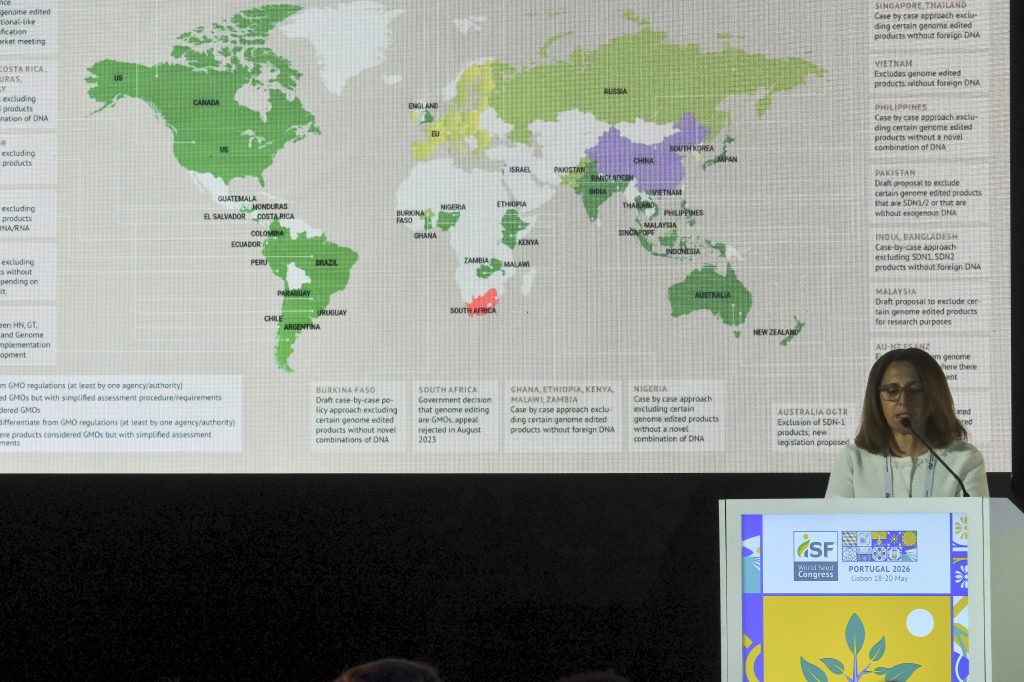
For the seed sector, this is a defining challenge. ISF’s Director for Innovation, Trade & Market Access, Dr. Khaoula Belhaj-Fragniere, presented the importance of gene editing for the seed sector in addressing global challenges and the state of global plant breeding innovation policy, highlighting both the fragmentation and the positive trend of governments enacting regulations supportive of new breeding technologies such as gene editing.
Responding to Diverse Needs
Farmers are facing more frequent droughts, heat stress, pests, diseases, and market disruptions. Consumers are also continuously asking more from the food system: better nutrition, less waste, lower environmental impact, and more reliable supply. Gene editing can help respond to these needs by enabling more precise improvements in crops, from resilience and quality to sustainability and value.
Eyal Maori of Tropic highlighted how gene editing can make crops not only more resilient but also more valuable. Products such as non-browning bananas show what this can mean in practice: reducing food waste, extending shelf life, and creating benefits across the value chain. But bringing these products to market is not simple. It requires years of technical development, access to elite germplasm, regulatory navigation, and coordination with growers, retailers, and consumers.
According to Tom Adams of Pairwise, the value proposition must therefore begin with the product benefit, not the breeding method. Whether the benefit is better taste, improved health, reduced waste, or greater sustainability, consumers need to understand why the innovation matters in their daily lives.
“Consumers buy products, they don’t buy technology.” – Tom Adams
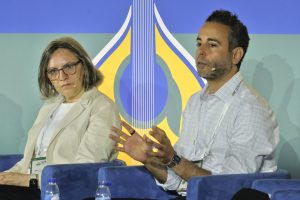
The panel also underlined that innovation does not move in a straight line from laboratory to market. Dr. Simona Radutoiu of ENSA described the process as integrated rather than linear. Partnerships among researchers, companies, regulators, farmers, and retailers are essential to translate scientific discovery into products that can be grown, approved, distributed, and eventually adopted.
The Role of Regulation
Regulation remains one of the most important factors shaping the future of gene-edited crops. Ana Paula Garcia of DGAV highlighted the importance of science-based and proportionate regulatory frameworks, including ongoing discussions in the EU on New Genomic Techniques (NGTs). Clear, predictable rules are essential for investment and market access.
Yet regulation alone will not build trust. The panel agreed that the sector must communicate more proactively, focusing on tangible benefits rather than technical details. As Ana Paula Garcia noted, many discussions still take place among scientists, farmers, and company specialists, rather than with the wider public.
The opportunity is to change that. Gene editing can support more resilient, sustainable, and consumer-relevant food systems. But success will depend on strategic and purposeful collaboration and communication.
For further information on this topic, please contact Dr. Khaoula Belhaj-Fragnière of the ISF Secretariat.#