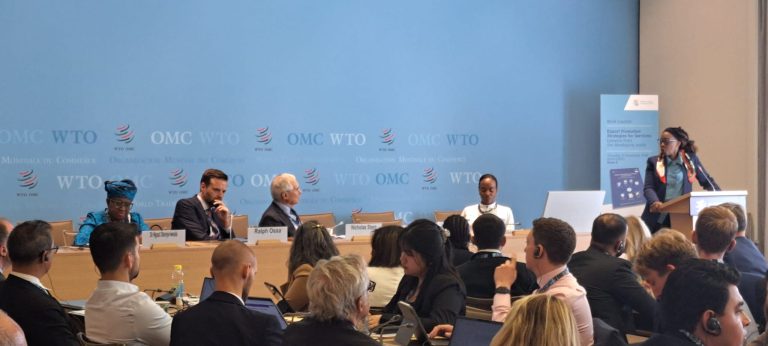
At the ISF World Seed Congress 2026 in Lisbon, the Value Chain Forum brought together leaders from the seed and grain sectors to discuss a shared challenge: how to move plant-breeding innovation through global value chains.
The conversation focused on innovations such as gene editing, but discussions stemmed from the shared understanding that seed and grain are deeply connected – “two sides of the same coin,” as moderator Jean-Paul Judson stated. What begins as innovation in seed can later become a traded commodity in the grain system. For this reason, cooperation across the value chain is essential from the outset.

Speakers Krista Thomas of the International Grain Trade Coalition (IGTC), Arnaud Petit of the International Grains Council (IGC), and Jaine Chisholm Caunt, OBE, of the Grain and Feed Trade Association (GAFTA) shared how the grain sector moves agricultural products through international markets. If policy, regulation, and communication are misaligned, innovation can create friction rather than value.
The Risks of Regulatory Uncertainty
One of the main concerns discussed was the risk of regulatory uncertainty. The panel described a “nightmare scenario” in which a product approved in one country is not approved in another, creating uncertainty for exporters, importers, grain handlers and farmers. This is especially complex in the grain trade, where commodities are often transported in bulk and commingled through storage, handling, and shipping systems.
 Traceability is therefore a major challenge. While identity preservation may be possible in some high-value or specialized supply chains, it is far more difficult in large-scale commodity trade. If regulations require a level of separation or detection that the system cannot realistically deliver, the result may be trade disruption, higher costs, and reduced market access.
The panel strongly emphasized the need for science-based and risk-commensurate regulation. For plant breeding innovation to deliver benefits, regulatory systems must be proportionate, predictable and internationally coherent. Different national approaches will always exist, but unnecessary divergence can create legal and commercial risk across the value chain.
“What we need to do is to actually create more stories which show the impact of what those policy changes mean.” – Jaine Chisholm Caunt, OBE
Another important point was the need for governments to speak with a unified voice. In many countries, agriculture, trade, environment, food safety, and innovation policy may sit in different ministries. If these ministries are not aligned, companies and trading partners face mixed signals. Clear coordination within governments is just as important as dialogue between countries.
The discussion also addressed the high cost and long timelines associated with regulatory approvals. Rather than waiting for universal global alignment, the panel suggested building bridges between existing systems. This could include mutual understanding of regulatory approaches, practical information-sharing, and early dialogue between exporting and importing markets.
“It will take ages to say we will force one region to change its regulation… It is important to think about how we can build bridges between these different regions.” – Arnaud Petit

Technology may also help. Digital tools and artificial intelligence could improve market transparency, support documentation, and help the grain sector better understand commodity flows. However, technology alone will not solve the challenge. Adoption by trading partners, especially importing countries, remains essential.
The Importance of Storytelling
Looking ahead, the panel called for more practical storytelling. Policymakers need to understand not only the technical details of regulation but also the human consequences of uncertainty: farmers losing market access, companies delaying innovation, and consumers missing out on potential benefits.
For the seed sector, the message from the panel resonated: innovation cannot stop at the laboratory, the field trial, or the farm gate. To reach farmers and consumers, it must move through a connected value chain. This requires cross-sector coordination, enabling regulatory frameworks that support both innovation and trade, and a compelling story that reinforces trust among all stakeholders.#